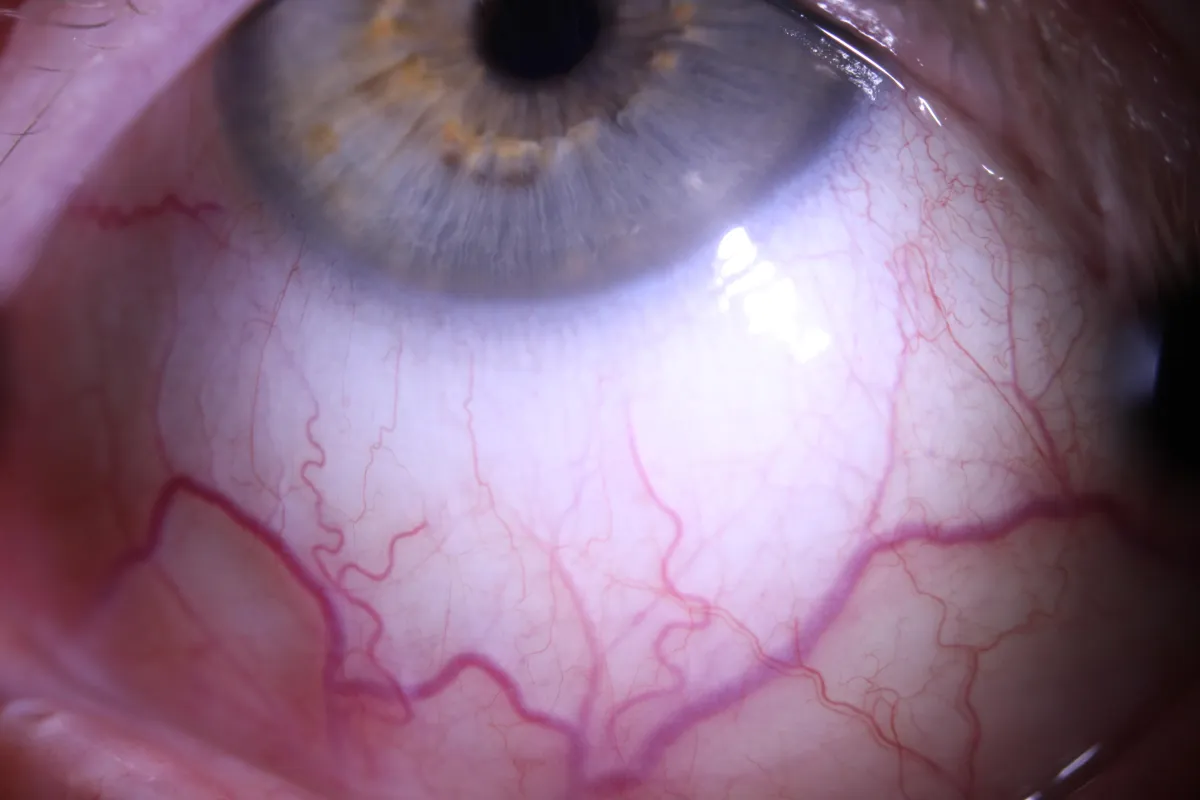
The Value of Including the Sclera in an Eye Assessment
This article is for informational purposes only and is not meant to diagnose or prescribe. It does not replace the care of a qualified health professional.
Looking Into the Eyes for Deeper Health Insights
Think of the last time you looked someone in the eye and intuitively knew they weren’t well—just from the appearance of their eyes. In that moment, you tapped into the very principle behind eye analysis, probably without realizing it.
Professional eye assessment goes far beyond simply observing the iris. Practitioners examine three key areas:
Pupil size, shape, and border — providing information about nervous system function and spinal alignment
The sclera (the whites of the eyes) — revealing inherited and acquired health imbalances, plus areas that are healing
The iris structure and color patterns — showing inherited tendencies and currently active imbalances
Together, these elements form what is known as constitutional iridology. Each part supplies complementary information about a person’s constitution, current health status, and predispositions, guiding more precise questions and personalized recommendations.
Why the Sclera Matters in Health Assessment
Even in conventional medicine, doctors examine the sclera for color changes, inflammation, thinning, or deposits. A classic example is yellowing of the sclera, which often signals liver issues with bilirubin processing.
Sclerology takes this observation much further. The sclera contains a detailed map linking specific zones of the eye whites to corresponding organs and body systems — similar to how reflexology maps the feet. This allows practitioners to identify areas of congestion, stress, or imbalance before they become more serious.
A thickened blood vessel (called a “line” in sclerology) in a particular zone can indicate congestion in the related organ. When a line crosses multiple zones, it reveals how stress in one area can affect others, showing interconnected health patterns.
What Scleral Lines Reveal About Your Health
Not all scleral lines carry the same meaning:
Inherited lines — present before age seven — indicate genetic tendencies that require lifelong attention.
Acquired lines — reflect the impact of stress, poor nutrition, injury, lifestyle factors, or environmental influences.
These signs often appear well before noticeable symptoms. By monitoring changes in scleral lines over time, practitioners can detect pre-clinical developments and support early intervention. This proactive approach is one of the greatest strengths of eye analysis for health insights.
How Iridology, Sclerology, and Pupil Analysis Work Together
Iridology, Sclerology, and pupil studies are most powerful when used together. Iridology shows constitutional strengths and weaknesses, while sclerology reveals real-time stresses and imbalances. Pupil analysis adds important information about the nervous system.
This multi-layered system creates a comprehensive, non-invasive picture of health that is richer than any single method alone. As Leonard Mehlmauer, a leading educator in eyology, states: “the eyes are the richest source of non-invasive health information available.” They reflect both our inherited blueprint and the dynamic changes occurring throughout life.