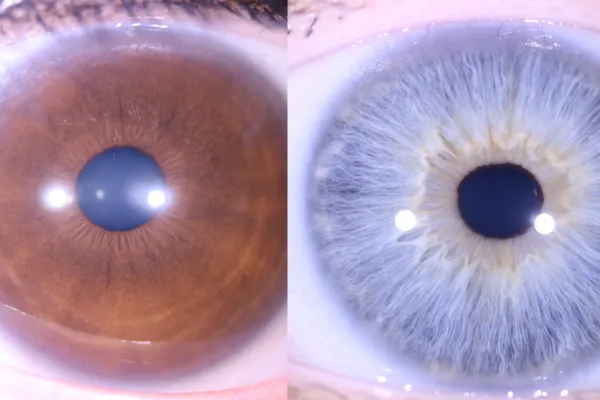
Pupil Size & Shape in an Iris Assessment

This article is for informational purposes only and is not meant to diagnose or prescribe. It does not replace the care of a qualified health professional.
Understanding Pupil Size and Shape in Eye Assessment
When was the last time you noticed someone’s pupils? And what exactly did you notice?
Most often, size is the first thing that catches our eye. Large pupils might lead to the assumption of drug use, while small pupils may spark other conclusions.
Factors That Influence Pupil Size
It’s true that lighting and certain substances definitely influence pupil size. We also need to remember that stress, nervous system activity, spinal alignment, and medication side-effects can show up in the pupils. This is why they’re such a valuable part of an eye assessment.
The Two Key Aspects of Pupil Analysis: Size and Shape
One reason pupils are so practical to work with is that we only need to consider two aspects: size and shape. Simple, right? But within those two features lies a wealth of clinical information.
Unequal pupils (anisocoria), irregular shapes, or pupils that don’t respond properly to light can all indicate deeper imbalances that are worth investigating further.
Why You Should Never Assess Pupils in Isolation
That said, it’s essential not to view the pupils in isolation. In professional practice, pupils are most powerful when assessed alongside the iris and sclera, and considered in light of the client’s symptoms and history.
When we connect those dots, we move beyond superficial assumptions and gain a much clearer understanding of why the client is presenting with specific concerns. This helps us create more focused recommendations.
Pupil Analysis for Holistic Practitioners and Students
For students and holistic practitioners, this is a key principle: eye analysis is about pattern recognition and context, not snap judgments. Pupils may look simple, but when integrated with the rest of the eye and the client’s case, they provide insight into nervous system balance, stress load, and constitutional tendencies.
The Bigger Picture: What Your Pupils Reveal
In short, the pupils are not just black holes that let light in—they’re part of the larger story the eyes are always ready to tell.