Intro to Iris Mapping
This article is for informational purposes only and is not meant to diagnose or prescribe. It does not replace the care of a qualified health professional.
Introduction to Constitutional Iridology and Iris Mapping
We've only just scratched the surface in our recent mini-class videos. You've glimpsed key concepts, but without full context, it can feel fragmented. As we layer in more detail, the real power emerges: learning to connect iris observations directly to your client's current health picture and genetic predispositions.
If you're finding value here, share your thoughts in the comments—I'd love to hear your questions or how you're applying these ideas in practice.
Why This Iridology Map Stands Out
Today, we’re taking a look at iridology mapping.
Watch this short 4 1/2 minute video.
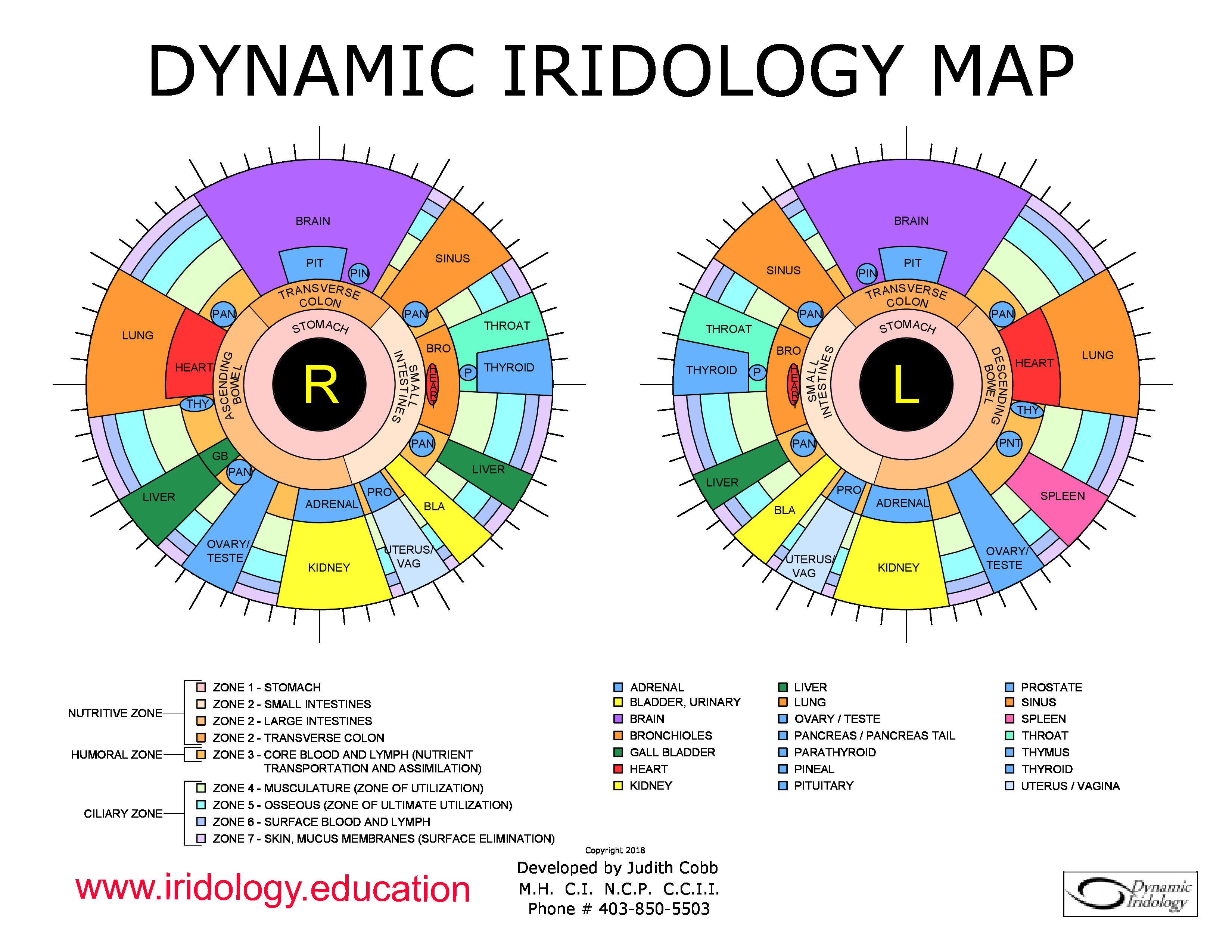
This is my preferred iridology map. Notice how uncluttered it is compared to many charts you've seen. It avoids over-dividing the iris into micro-segments because constitutional iridology focuses on broader organ reaction fields and inherent tendencies—not minute anatomical slices. This simplicity reduces interpretive errors and keeps our focus on the big picture.
The iris divides into organ reaction fields, much like reflexology maps organs onto the feet.
The Seven Concentric Zones of the Iris
You'll also see the seven concentric zones:
Zone 1 — Stomach and gastric mucosa; reveals predispositions to stomach acid levels or stomach lining issues.
Zone 2 — Intestinal tract and mucosal integrity.
Zone 3 — Nutrient absorption across the intestinal wall into core blood circulation and core lymph.
Zone 4 — Specific organ predispositions to challenges.
Zone 5 — Bone and structural tissue tendencies.
Zone 6 — Surface blood and lymph circulation.
Zone 7 — The "ultimate detox zone": inherent integrity of skin and other epithelial tissues.
How to Read Iris Markings in Constitutional Iridology
Iridology is never "paint by numbers." A single marking doesn't tell the full story.
For instance, a closed lacuna in one liver reaction field suggests an inherent predisposition to liver challenges. There are three liver fields—seeing lacunae in more than one liver reaction field amplifies significance. Layer in a pigment freckle, a transversal, or correlating symptoms, and the pattern becomes actionable.
We look for convergence: two or three markings pointing to the same issue to give depth to the questions we ask.
When you combine solid knowledge of anatomy, physiology, and constitutional iridology, you can trace symptoms back to their roots—distinguishing genetic/inherent weaknesses from lifestyle-induced burdens.
Next Steps: Case Studies and Professional Training
Next week, I'll share a complete case study from intake to iris analysis to recommendations. Stay tuned!
If you're a health professional interested in adding constitutional iridology to your skill set, send me a direct message. I'd be happy to discuss upcoming courses or how this tool can enhance your assessments and client work.
Looking forward to your comments and questions.